Banano Costa Rica

This is how
Costa Rica tastes

The banana that brings nature, fair labor, and sustainability from its origin to your hands

A LITTLE PIECE OF COSTA RICA

The same taste.
Many reasons
to try it.

Behind every Costa Rican banana is a protected forest, thriving communities, and over 150 years of agricultural tradition in a country that chose peace. This is the taste we export to the world.

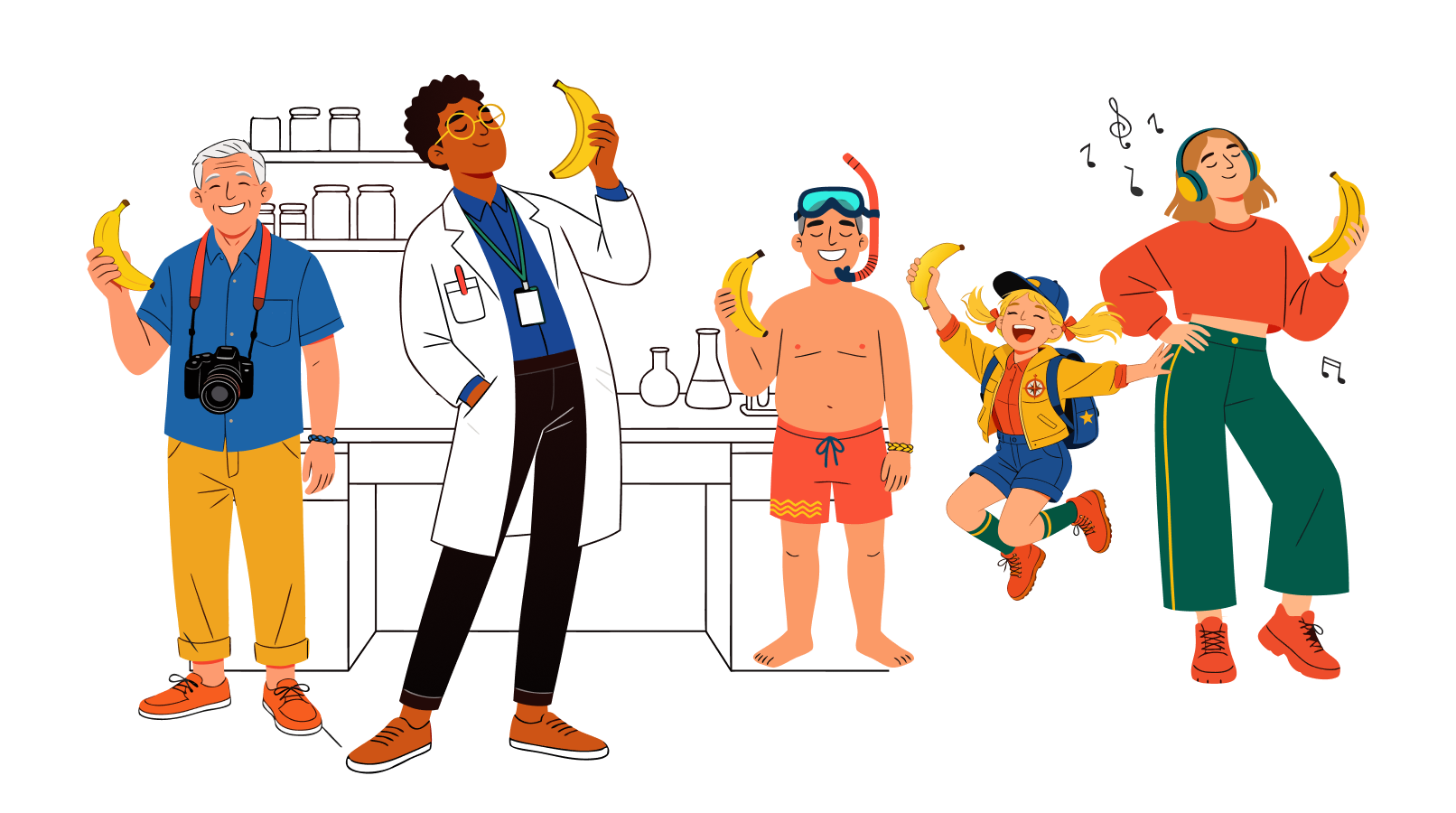
Ilustración de diferentes personas de distintas edades y profesiones disfrutando de Banano de Costa Rica.

DISCOVER THE ORIGIN

This is the taste of...

Tucán comiendo bananos

THIS IS HOW

NATURE TASTES

Next to every plantation is a forest; the banana industry protects thousands of hectares of forest.

Niños y niñas bailan con trajes típicos en celebración del Día de la Independencia de Costa Rica

THIS IS HOW 

CULTURE TASTES

Tradition and roots beat in every farm and producing community.

Rana Blue Jeans en una hoja.

THIS IS HOW

BIODIVERSITY TASTES

Costa Rica holds nearly 6% of the world’s biodiversity, and our farms coexist with it.

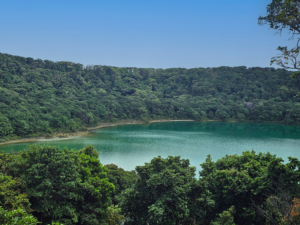
Vista general de la Laguna Botos, en el Volcán Poás, Costa Rica.

THIS IS HOW

SUSTAINABILITY TASTES

100% of the plastic used in banana production has been recycled since 1997.

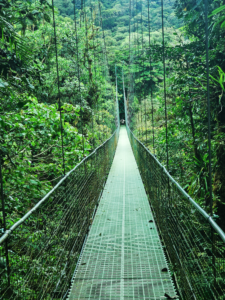
Puentes colgantes de Monteverde, Costa Rica.

THIS IS HOW

TRUST TASTES

GlobalG.A.P. and/or Rainforest Alliance certification on 100% of Costa Rican farms.

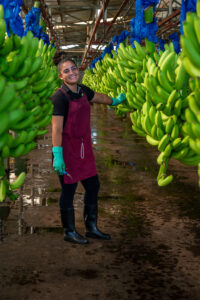
Trabajador de control de calidad del banano

THIS IS HOW

FAIR WORK TASTES

Over 40,000 direct jobs, all with social security for their workers.

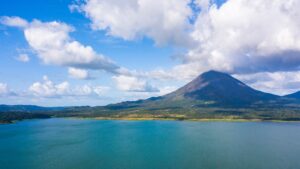
Volcán Arenal

THIS IS HOW PRODUCING MORE

WITHOUT USING MORE LAND TASTES

The banana agricultural frontier has not expanded in over 20 years.

Nińos y niñas desfilando en el Día de la Independencia

THIS IS HOW

A COUNTRY THAT CHOSE PACE TASTES

Bananas grown in a nation without an army, with over a century of democracy.

DISCOVER THE HANDS

Behind the banana

Stories behind the banana

13 Videos

SINCE 1871

History of the banana in Costa Rica

  • 1871-1872

    The history of the Costa Rican banana begins: the fruit that would open trade routes worldwide.

  • 1880

    The first Costa Rican banana is exported to the world.

  • 1997

    The recycling of 100% of the plastic used in banana production begins, still in effect today.

  • 2012

    The Special Fund for Prevention and Infrastructure (FEPI) is created to support communities.
  • Hoy

    100% of banana farms are certified with international standards.
BACKED BY

Companies that cultivate this taste

How would you rate the taste of Costa Rican bananas?

Your opinion helps to continue improving every farm, every harvest, every banana.
Interested in buying?

Banano de Costa Rica,
ready for your market

Connect directly with certified farms, prepared to export Costa Rican quality to the world.

Different people, same taste

The same great taste, for every consumer

Personas ilustradas disfrutando el Banano de Costa Rica.

Banano de Costa Rica in data

A protected forest surrounds every farm. The banana industry protects and reforests thousands of hectares of forest that serve as a habitat for local flora and fauna.

The sector helps maintain clean water and sanitation by building infrastructure such as 13.83 km of levees, improving connectivity and preventing floods.

Banano de Costa Rica in data

The Costa Rican banana industry benefits and positively impacts 270,606 people in producing regions.

Since 2014, the Costa Rican banana sector has invested USD 2.46 million in social projects.

Banano de Costa Rica promotes national sports by sponsoring sporting events, such as the San José Marathon, the Open Water Circuit, and the Costa Rica Triathlon Series.

Banano de Costa Rica in data

Banano de Costa Rica is free of pesticide residues; no Costa Rican banana has ever been rejected in international markets for pesticide residues.

The banana sector promotes responsible agrochemical use, protection barriers in rivers and streams, waste management programs, wastewater treatment programs, and water-saving programs, which have achieved water savings in banana production of between 30% and 50%.

Banano de Costa Rica in data

Banano de Costa Rica drives responsible production, with 100% of the plastic recycled and an annual average of 1,859 tons of polypropylene and 6,140 tons of polyethylene recycled.

The sector promotes solar panels on banana plantation.

The industry forms alliances to meet its greenhouse gas emissions goals: Institutional Environmental Management Program (PGAI) since 2011. Banana Environmental Commission (CAB): composed of various organizations.

Banano de Costa Rica in data

100% of Costa Rican banana farms hold international standard certifications.

85 external audits are conducted per year, which include GlobalG.A.P., Rainforest Alliance, SMETA, Sustainably Grown®, esencial COSTA RICA, LEAF Marque, ETI, Carbon Neutral (CN), Fair Trade USA (FT-USA), and SA8000.

Banano de Costa Rica in data

The banana sector generates over 40,000 direct and 100,000 indirect jobs and contributes USD 5.34 million per month to the Caja Costarricense de Seguro Social [CCSS, Costa Rican Social Security Fund].

The industry promotes labor rights and gender equality through training and programs, such as “Women in Fieldwork,” to eliminate discriminatory practices and foster an inclusive work environment.

The banana industry actively participates in national and international dialogue platforms to influence public policies on sustainability, labor rights, and fair trade, such as the World Banana Forum.

Banano de Costa Rica in data

The Banano de Costa Rica agricultural frontier has not expanded in over 20 years, improving productivity through Good Agricultural Practices (GAP).

Banana production coexists with the conservation of existing natural resources, making the protection and reforestation of the forest around plantations a priority.

Banano de Costa Rica in data

The banana sector is deeply committed to Costa Rica’s children and education.

Since 2006, the banana industry has consistently promoted programs that support education and the well-being of banana-producing communities. During this time, the industry has invested more than CRC 108 million in initiatives that strengthen human and social development in the region.

These initiatives include constructing and remodeling classrooms in educational centers, donating school supplies, books, and equipment, running health campaigns, and supporting cultural, environmental, and sporting activities that promote the communities’ overall well-being.

Among the efforts carried out are the “Libros para todos” programs, which have impacted 1,873 children with donations of 8,158 books since 2013, and “Niños al Museo ¡Vamos de paseo!”, a program that in 2025 took over 200 children to the Children’s Museum to complement their knowledge of science, history, and Costa Rican culture.

Since 2014, USD 20 million has been invested in infrastructure, such as the construction of 41.42 km of roads, and since 2016, USD 4.16 million in research and innovation.